Metawriting posts from the new blog location

Showing posts with label teaching philosophy. Show all posts

Wednesday, January 23, 2013

My blogging persona


I am writing my 100th blog post at the same time that many elementary school students are marking their 100th day of school. For many of those students the 100th day brings with it an assignment to collect/display/share 100 items of some sort (buttons, paper clips, etc). I can still remember my son agonizing over what he should collect. He wanted it to be something unique, but it also needed to be readily available and portable. Now I can’t even remember what he chose, but I suspect it was something we found in the kitchen. However, my recent consternation about what to do with my 100th blog post combined with recent Facebook posts by parents and teachers of primary students celebrating the 100th day of school reminded me of that dilemma and helped me put my own struggle into perspective. Yes, this is an exciting milestone, but there will be many more blog posts to come.

But what can I, or should I, use this occasion to discuss? I started two different posts (about alternate academic career tracks and my annual review) and considered a host of teaching-related posts (my recent experiments with badges and Google+ communities, for example) but in the end decided that these posts can wait for a less momentous occasion.

Then I contemplated whether this might be the best time to wrap up this blog – as a Blogger blog that is. I have a professional web site and have been considering for months the advantages and disadvantages of maintaining a separate blog and web site as well as the issue of Blogger vs. Wordpress. But I’m pretty sure I’m making the switch to a Wordpress blog on my own web site (the control and aesthetic issues I’m having with Blogger are simply beginning to outweigh the advantages of Blogger) so there goes that topic which many others have ably discussed such as this post on The Painted Hive and Build Your Own Blog.

Then I mulled over the idea of discussing my history and development as a blogger. This blog is three years old so I have been able to maintain a fairly consistent presence, but the fact that it took that long to arrive at the magical “100” is a clear indication of my inability to post weekly and doesn’t tell us much about me as a blogger. My tags are a little more telling, but also somewhat problematic as I haven’t always been consistent (or smart) about their use. I’m kind of interested in my Top 5 Posts (as indicated by readership) but that also says more about my readers than about me. In the end, I concluded that a picture was worth more than words and simply plugged my blog into a Wordle. This simple graphic summarizes what my blog is all about.

My description of my blog is:

This blog reflects my interest in writing pedagogy, agency and efficacy, and teaching with technology -- as a rhetorician and researcher as well as writer, teacher of writers, and teacher of writing teachers.

The Wordle clearly highlights the topics that I write about although some trends were a little surprise to me. Obviously as a teacher and National Writing Project site director issues surrounding students, classes, and education are of keen interest and I clearly write about them a lot. However, I tend to write from a more personal place about my own experiences and experiments in my classroom. As a social media proponent and online teacher/learner it is also not surprising to see that idea highlighted.  Similarly, as I am interested in the idea of community as a teacher, administrator, and researcher I was not surprised to see that featured prominently. But I was rather surprised to see that writing was not among the most prominent topics I write about. Perhaps I need to consider that as I plan future blog posts. I think using Wordle as a reflective and analytical tool can help a blogger consider the past and plan for the future. It was certainly a worthwhile exercise for me.

Finally, after reading Pat Thomson’s post about blogging identity I decided that this might be the perfect time to explore my own blogging identity. Like Thomson (and most other humans), I have multiple private and professional identities and have written about this identity problem before. However, I tend to keep this blog focused on my various professional identities (although I have upon occasion discussed more personal topics that connected with these professional interests). I do not do a good job separating the personal from the private when it comes to social media, but that is another post for another day. Unlike Thomson, I did not delete my rant about education, but then as someone who works (and writes and researches about that work) with teachers I think my concerns about my son’s education touch on (at least peripherally) what I write about in the normal course of blogging.

I really like two ideas that Thomson shares in her post. I, too, blog in an effort to “de-privatize” my own thoughts and struggles with teaching, learning, and researching. Yes, I sometimes worry that I overshare, but as someone who advocates reflection for her own students how can I not practice what I preach? I truly believe in the importance of reflection to learning and growth and this blog plays a tremendous role in my own growth and learning. Interconnected with this is the simple fact that I am a teacher and a National Writing Project site director. As such it is my job, my duty, my calling to make visible my struggles, failures, and successes in hopes that these experiences will provide lessons for others as well as my entrĂ©e into conversations about these issues. That is the power of blogging and social media – that I can connect/communicate and learn/share with someone like PatThomson who is not even on my continent.

Also, blogging is a powerful tool for creating that sense of “there” that Thomson discusses in her post. Face-to-face and real-time connections can be powerful and have a long-term impact, but they are also transitory. I have a terrible memory, especially when it comes to verbal interactions, but blogging can live on and remains accessible. It can provide a “just in time” spark or response -- at least I hope mine does.


Friday, November 30, 2012

Writers as Reflective Practitioners


This week our Faculty Learning Community focused on the Morehead Writing Project met and we talked about our top priority for our writing classrooms and because many of us are also engaged in mentoring instructors and tutors we also talked about our primary goal for those writing instructors and tutors. It was a lively and interesting conversation, but what really struck me is that ultimately all our answers could be boiled down to one simple response: reflective practice.

The concept of reflective practice is to engage in continuous learning. Engaging in reflective practice requires an inherent belief that we are never done learning and growing. Reflective practice requires that we learn from experience rather than teaching or knowledge transfer.

The teacher as reflective practitioner is an important part of our work with the National Writing Project. We encourage the teachers we work with to continually reflect on what is happening in their classrooms to think about what is working and what is not as well as why. It is that reflection upon the why that is key to this practice of growth and development.

In recent years I have incorporated reflective practice into my work with writers as well as teachers. Writers learn and grow by writing but also by reflecting on their past experience, both challenges and successes. What were their goals? What did they do to achieve those goals? What worked? What did not? Understanding the answers to these questions can help writers adapt their practice to future situations and better position them to make better choices.

My goal is always to make my students into writers, but more important, to make them into self-regulating writers. Reflective practice is essential to this transformation into self-regulating writer. With reflection, with a recognition and practice of continually reflecting on the lessons offered by each experience, writers can continue to learn and grow long after they leave the writing classroom and hopefully throughout the rest of their lives. That is my goal for my students and I am continually refining my pedagogical strategies to achieve this goal.

This blog is my own struggle to be a reflective practitioner. I hope that others benefit from my posts, but ultimately I know I am the primary beneficiary as I record my achievements, defeats, struggles, and progress. Do you engage in reflective practice? Do your students?

Wednesday, October 17, 2012

Scared and Scarred No More


Last week I made the argument in “Breaking the Cycle of Defeat” that we need to spend more time in our classrooms attending to the self-beliefs of our students as well as the specific writing lessons we want/need to impart. I contended that if we want to break the cycle of despair and defeat then we must help our students become confident writers so they take more from our classes than scar tissue and a lifelong aversion to writing. This week I want to address the ways that we can help those scared and scarred students become writers. 

We must begin by making our classrooms a safe place to try and to fail. If students are given the chance to participate in low-stakes writing that is offered an audience but not assessment then they are more likely to write – both more often and at greater length. In addition, they will be more willing to experiment and take risks with their writing once they learn that the writing will be not be assessed. Examples of the types of low-stakes writing assignments I use in my own classes include brainstorming activities, reflection journals, and discussion board posts. These writings are shared with the class and receive comments which are focused on the content and not the form of the message.

Writers also need to read. They need to read to inspire and spark new ideas as well as to find models and mentors. Student writers should definitely read professional, polished writing, but they should also read the work of peers – especially pieces not yet polished and still in process. Even better, developing writers should see the early drafts and unpolished pieces of their mentors and teachers. Too often, struggling writers believe they are the only writers who struggle – and worse, they believe that good writing arrives fully formed and polished to other writers. They do not understand the time and work that goes into writing – and telling them is not enough. They need to see it happen and they need to experience it. They need to be led through the process before they will attempt it on their own. In my classes I use writing workshop to guide students through this process. We brainstorm and plan writing together, students share writing in various stages so everyone can see their process and progress, and then we revise and edit their writing together.

However, the most crucial aspect of writing workshop is feedback. Students should receive various types and levels of feedback from a variety of sources. Most important, that feedback should be focused on providing useful, supportive information – not simply negative assessment. During workshop, the idea is to provide feedback to help develop and shape a piece of writing. In addition, student writers should provide feedback to others. Engaging in discussions of writing as writers and with other writers can not only help student writers improve the specific piece they bring to the workshop, but also teach them how writers work and collaborate. My hope is that providing this type of guided feedback will help them learn and grow as writers as well as develop their own writing process which will support that continued growth and development long after they leave my class.

While I hope these steps will help my students become less scared and more hopeful about their progress as writers, I also like to have conversations about the struggles and fears that all writers face no matter how much writing success they may have achieved. In this way, our writing workshop offers support for the improvement of the writer as well as the writing. I understand well, as a result of my own research focused on writing apprehension and writing self-efficacy, how the past can so dominate a writer emotionally that there are actual physical manifestations of that fear. How can we expect a struggling writer to work through something that causes physical and emotional stress without addressing it? That is why we need to have real conversations and share real stories – our own as well as those of our students plus a judicious sprinkling of the stories of more famous writers. I cannot promise that working through these four steps will erase the scars that our student writers bear, but I know thanks to my own research as well as that of Albert Bandura and others that we can reduce writing apprehension and increase writing confidence by attending more closely to our students self-beliefs.


Friday, October 5, 2012

Are you spending enough time thinking about writing?


My students don’t spend enough time thinking about writing – and probably yours don’t either. I understand why. After all, they have lots of other things on their mind. And to be honest, I sometimes don’t think about writing as much as I should and this is my field of interest, my passion, and the driving force behind my paycheck.

As a writer who spends a lot of time with other writers, I also know that too much thinking about writing can be a bad thing – a dangerous thing. It often leads to the two primary dangers facing writers (well the two leading dangers after avoiding the siren call of Words With Friends) -- spending so much time thinking about what to write or how to write it you actually forget to write. Either rabbit hole can lead to madness and put an immediate end to productivity.

 The truth is that for most of our students too much thinking is not a problem. I want to blame our current education system for this lack of thinking. After all, our obsession with assessment and interminable pushing to teach to the test has created a monstrous education system which offers very little time for simple thinking and reflection. Even worse, there are only penalties and no rewards for encouraging thought and inquiry in the typical K-12 setting. But that is another blog post. I must confess that even though I grew up in a kinder, gentler era of education where there was time and energy devoted to reading, writing, and creativity, and my teachers were not worried about how test scores would impact their job, I did not spend a lot of time thinking about the art and craft of writing. And I KNEW that I wanted to be a writer, so I can only imagine that my classmates spent even less time on it.

I believe that this is a problem, this lack of thinking about writing, we should worry about as writing teachers. Many of my peers want to spend a great deal of time obsessing about the two dangers I mentioned above – the what and the how of writing. In fact, that is what my students obsess about the most as well (hmmm, perhaps there is a relationship there). We spend meetings debating whether to assign a persuasive essay or an analytical essay and, of course, students’ punctuation choices often provoke hilarity, but is that where we should be spending our time and our students’ time?

I don’t want to dismiss the importance of grammatical knowledge or genre awareness, but I believe we will not solve the challenges of either without helping our student writers develop a deeper awareness of writing. Writing is not WHAT we write and it is much more than following formatting, grammar, and spelling rules. We need to help our students think like writers before they can become writers. This concern is one of the primary motivations behind the “writing about writing” movement in composition studies. In WAW-based classes, students read theory and research about writing studies, think and discuss their reading, and then write about these ideas as well as study writing on their own.

While I have moved my own teaching away from a WAW-focus, I still focus a great deal of class time and energy on reflection and discussion about writing because I believe that writers do obsess about what and how as well as why. Writers write but they also think about writing -- and, in particular, they think about their writing. I want my students to become writers and I believe an essential part of that transformation must involve learning to think like a writer which means we must think about writing and how writers think and behave. I do this by leading weekly class discussions on these issues and requiring students spend reflective time each week on these issues as well. Not only do I hope to use these tools to transform my students into writers, but this process also helps me spend more time thinking about writing. Win-Win. Do you spend enough time thinking about writing? Do you spend enough time encouraging your students to think about writing?

Wednesday, June 20, 2012

Writing Networks or Creating a Community of Writers


I have spent a lot of this month thinking about community. Of course, as those who read my blog know, I have written a lot about community over the past year, but I’m teaching summer classes and preparing my discussion notes prompted me to think about what I have learned about community this summer.

Writing within a community of writers has always been important to me as a writer and so I have always worked to provide that same sense of community for my writing students, but recently I have become very interested in what makes a community and how a community is formed. I know that communities don’t form by accident and simply assembling a group of people does not a community make. Last summer I wrote “What is a community?” and “Creating a Classroom Community;” however it is when I began learning more about social capital theory that I was able better understand how community works. Social capital is essentially the investment of your time, energy, and knowledge in a specific community and the benefits you derive from that investment. A sense of community is important to your willingness to invest and your level of involvement and commitment plays an important role in what and how much you will give to the community.

So what makes someone more likely to invest in a community? Community members have to want to join. Possessing both power and agency are also important for the members of a community to develop the trust essential to social capital. This trust must encompass social controls as well as reciprocity. Building a community requires willing members, trust, social norms, and reciprocity. This summer as a National Writing Project Site Director I’ve had the privilege to observe the formation of four communities of writers (read more in “Transformations, Magic, and the Power of Writing and Writing Teachers”). While I agree that those qualities are essential to creating social capital in a community, I also believe there is an essential ingredient missing from that list. I believe the group members must share a common goal in order for a true community to form from a group of individuals and for social capital to develop within that community.

It seems as if I’m stating the obvious. Clearly the group formed for a particular reason. What I mean is an actionable goal that they are ready, willing, and able to do something about. It is more than believing or caring about the same thing – it is working on something together. I think this is the reason why some classroom communities thrive and others wither on the vine. I’ve long known that we can make community work in an National Writing Project Summer Institute – especially if we take care with recruitment and selection – but this summer the Morehead Writing Project tried an online Summer Institute for the first time and we were more than a bit worried about our ability to create community without the opportunity to bond over parking woes, shared meals, and all the side jokes that come with sharing space for an extended period of time.

What we have found is that we can create an online writing and learning community. Our online group is working together, supporting each other, and bonding. I feel it and see it but more important so do they – and most important of all (to me anyway) is that they see the importance of this sense of community to the growth and development of their own students. In their own words, they have noted that what has made the difference for them in their sense of community is the level of trust and sense of equality in the group as well as the open and available communication streams. We use Twitter (#ENG608) as well as sharing documents that we create together and comment upon those individually written. Trust has been established because we have shared extensively and increasingly openly our fears and failures. We also know that we can trust that help, encouragement, and interest are there from the other members of the group. My less-successful classroom communities did not have this level of trust and reciprocity so this is something I will need to work on. However, a key part, according to the online group, is the sense of equality. The students are taking on leadership roles and with the use of contract grading I am really able to steer clear of center stage and dominating the conversation. Of course, this is easier to achieve at the graduate level so I remain uncertain about how to make it work in an undergraduate class. All this is supported by social capital theory, but I remain intrigued by my idea of a common cause in terms of its impact on community.

Teachers come to a National Writing Project Summer Institute because they want to become better teachers of writing. NWP believes that teachers who write are better teachers of writing and so a great deal of time and energy at an SI is focused on transforming teachers into writers. Once they have experienced the magical transformation and begin to grow in confidence, teachers then embrace this foundational idea. I believe it is at this point that the true community forms. They now have a common purpose and understand how the other teachers in the room can help them learn and grow as writers as well as teachers, but perhaps most important they understand how community can help other groups learn and grow as well.

Similarly, I visited two different writing camps offered by the Morehead Writing Project this summer. Both developed writing communities and the kids had a lot of fun writing, but the second camp focused very closely on “writing for change” and even though the kids involved in that second camp had fewer previous relationships I think they bonded more tightly as a group because they had the mission in common. The first group grew as writers, but I think the second group grew as writers and as people and as a community.

Ronfeldt writes “In Search of How Societies Work” that there are four major forms of organization: Tribes, Institutions, Markets, and Networks. He posits that all other forms are hybrids of these. His theory is that these forms have existed since ancient times, but each “embodies a distinctive set of structures, believes, and dynamics (with bright and dark sides) about how a society should be organized” and each “involves different standards about how people should treat each other.” I really want to think a lot more about his idea of networks and their development as I think those ideas work in interesting ways with my own ideas of community and social capital. I’ve taken a step forward in my understanding of community and network formation as both a teacher and a leader as a result of my teaching experience this summer and it has given me a lot to ponder (and I expect write about) in the future. I'm already starting to ponder these lessons and ideas in terms of my professional writing students and my work as a technical communicator.

Monday, May 28, 2012

My First Venture Into Contract Grading


First, I must give credit to both Cathy Davidson and Dave Cormier who were kind enough to openly share their grading contracts to support other educators attempting this for the first time. I definitely borrowed heavily from their example.

The class with which I am conducting my first foray into contract grading is an online version of a National Writing Project Summer Institute. The class is organized as an asynchronous graduate class with the option to take the class for six hours rather than three. The focus of the class, as of all NWP work, is to improve the teaching of writing. We will write, on personal and professional topics, and we will discuss and share our ideas about the teaching of writing. My colleague Lee Skallerup will join us as she wants to learn more about NWP work.

I remain intrigued by the idea of using contract grading for my more traditional classes, as I want all my classes to be a learning community rather than a traditional class. However, the very nature of an NWP SI is to be a learning community and years of experience participating in more traditional SI’s has prepared me to make this class my first foray into contract grading. As my students are teachers (or soon to be teachers) then I hope they will enter into our experiment with the proper spirit. I know this is going to be a great learning experience for me and hopefully for them.

I am interested by the increased opportunity for student success offered by contract grading and I am even more interested about the ways I can use contract grading and peer evaluation to foster self-regulation and self-directed learning in the way that Cathy Davidson argues for flipping or rather cartwheeling our classrooms. I will write more about this experiment/experience in the coming weeks but for now I will simply share my first grading contract and await feedback:

Contract Grading + Peer Evaluation:  Explanation and Contract

This class is an experiment in collective thinking, leadership, and project management.  The intent is to create a workshop (as opposed to classroom) experience where we explore, learn, and grow together while providing a safe place to experiment with our writing, thinking, and teaching as each student takes responsibility for individual and collective work. I want this to be a student-centered experience where you choose what your learning experience will be like, and make it fit your context and priorities.

Contract Grading is designed to change the power dynamic of the classroom. The instructor is still the ‘content expert’, but you are the one who knows how much time you have to devote to this course, and what you’d ideally like to get out of it. The contract lays out what ‘acceptable success’ looks like and then you get to make choices about whether you are willing to do the work to earn a grade deemed ‘excellent’. The contract focuses on your effort rather than on attempting to measure or quantify your learning. The peer evaluation provides support for your efforts in this class as well as helping you develop the necessary self-regulation to continue your growth and development after the class ends. This course aims for encouraging self-valued, lifelong learning.

This is my first time engaging in contract learning as an instructor, so there is a learning curve for me as well as well as for you, but if we work together I believe this can be a positive experience for us all.

Evaluation Method:
You determine your grade for this course by fulfilling a contract that spells out in advance the requirements for fulfilling the terms of your contract.   Peer evaluation comes in when students charged with leading for the week assess (Satisfactory or Unsatisfactory) how well their classmates fulfill their obligations to the class through reflection, discussion, and feedback. Peer leaders will work with the other students in the class, giving feedback to each student and working to achieve an S grade.   If the student fails to submit an assignment or does not submit a satisfactory revision after being given careful feedback, the peer leader will record a U grade for that assignment.   (The same method will work on assignments graded by the professor.) Every student will be in a position of peer-grader (working with two or three students at a time) one week during this class and will report these evaluations using a document viewable by the entire class.  Learning together and giving and receiving feedback is a subject we will discuss and practice.

Contract Grading:
The advantage of contract grading is that you, the student, decide how much work you wish to do; if you complete that work on time and satisfactorily, you will receive the grade for which you contracted.  This means planning ahead, thinking about all of your other obligations and responsibilities and also determining what grade you want or need in this course.   The advantage of contract grading to the professor is no whining, no special pleading, on the students’ part. If you complete the work you contracted for, you get the grade. Done. I respect the student who only needs a C, who has other obligations that preclude doing all of the requirements to earn an A in the course, and who contracts for the C and carries out the contract perfectly.   (This is a major life skill:  taking responsibility for your own workflow.)

Grade Calculating:
By June 5 (our second day of class), each student will email the instructor the contract (see below) for their chosen grade (or grades, contract for Eng 609 follows the contract for 608).  All requirements for each grade are spelled out below. 

There are only two grades for any assignment.  Satisfactory/Unsatisfactory.   Satisfactory is full credit.  Unsatisfactory (poor quality, late, or not submitted) is no credit.   At the end of the course, we tally.   If you fail to do a contracted assignment or your peers do not deem your work satisfactory, you will not receive credit for that assignment.  

Peer leaders (details below) who are in charge for a week will determine if the assignments posted during that week are satisfactory.  If not, they will give extensive and thoughtful feedback for improvement with the aim of collaborating toward Satisfactory work.   The goal is for everyone to produce satisfactory work, and the peer leaders will work with students to achieve that goal. 


REQUIREMENTS FOR A GRADE OF A in ENG 608:
(1) READING AND DISCUSSION, includes reading instructor lecture notes and required reading (book chapters, articles, etc.) as well as posting a substantive reflective response (by Thursday) which reflects your individual experience as well as the reading and making at least two responses to peer posts (by Sunday). Discussion will take place on a designated Google doc in the Reading and Discussion folder. Think of this as a collaborative research paper we are creating about the weekly topic. These can, and should, be inspired by and draw from your individual reflection journals but should not be simple repetition. They should engage your classmates and inspire discussion.

(2) WEEKLY REFLECTION JOURNAL POST, 500-1000 words about your views as a writer as well as a teacher in response to the class reading and discussion as well as writing group activities for the week.  Think of this as an evolving research paper.  It has the same importance and weight and seriousness.   You will create your journal as a Google doc in the Reflection Journal folder and share it with the instructor and class (simply adding a new post each week).   You will receive public feedback and responses from the instructor, any of the other students, and the two or three students leading and assessing that week.  Journal posts must be completed by Sunday night but the work should be ongoing throughout the week (with additions/changes after engaging in various class activities). All students are required to read their classmates journals and are encouraged to comment.   Journal posts may simply be reflections on yourself, your work, or your instructor’s or fellow learners’ ideas, but they should always be substantive, should use secondary sources where appropriate, and can use video, sound, images, animation as well as text.  They are intended to share your learning and make contributions to the field as well as give you the opportunity to wonder, question, challenge what you have learned and what you want to learn as a writer and teacher.

(3) LITERACY NARRATIVE, 500-1000 words (polished personal narrative) about your growth and development as a literate person including details that shaped the reader and writer you are today. Discuss specific events and people who had a powerful influence as well as your views about yourself as a literate person. You will create your literacy narrative as a Google doc in the appropriate Assignment folder and share it with the instructor and class.   You will receive public feedback from the instructor as well some of the other students.  All students are required to read their classmates literacy narratives and are encouraged to comment.   

(4) CREATIVE WRITING ACTIVITIES
  1. Starts, share at least six early drafts with class via the appropriate Writing Workshop folder in Google docs. These should be the result of a simple free write response to a prompt or an idea of your own. These should not be the result of a great deal of time (probably less than an hour). The intent is for you to get in the habit of writing to build your writing muscles. As a part of this process you must also pay it forward by reading your classmates writing prompt responses. You are encouraged to comment but keep these comments positive and encouraging as this work is very preliminary (ie. I would love to see you continue with this piece, your writing made me laugh, cry, etc.). Do let people know if a particular image, phrase, etc. is intriguing or ask questions (but what happened to the baby bluebird?). 
  2. Drafts, continue to work on at least two selected early drafts (using the same Google doc so we can track your progress, simply drag it to the appropriate Writing Workshop folder). These do not need to be final, polished drafts when you first share them but they should be complete (even if some sections might be a bit thin). The intent is for you to have something that can be used in writing workshop to start/continue a conversation about writing. On the designated Google doc indicate your particular worries, struggles, and/or concerns for your drafts. Ask for feedback but give your peers some guidelines so it is more meaningful and helpful. As a part of this process you must also pay it forward by reading your classmates drafts and responding to their requests. Your feedback should not focus on surface-level issues (grammar, punctuation, spelling, etc.) but deeper writing issues. What is your response to this piece (emotionally, intellectually)? Provide the feedback your peers request but also put some serious thought into the strengths and weaknesses of the piece – help the writer play to their strengths! Give them advice that will help them develop, improve, and finally polish this piece. Learning to evaluate writing is key to becoming a good writer. 
  3. Polished, experienced writers will tell you that no piece of writing is ever “done” but your goal here is to bring at least one piece of writing to a polished, complete form that you can proudly share/publish. Repeat the draft process (using the same Google doc so we can track your progress, simply drag it to the appropriate Writing Workshop folder) with one selected piece as necessary to move it toward that polished final draft.

(5)  PROPOSAL, one-page description of an article you could submit to a professional journal relevant to your current/future teaching position. The proposed topic should have clear relevance and connection to teaching writing in your current/future teaching position. Select a journal which could publish such a piece and base your documentation style on that journal’s editorial guidelines. You will create your proposal as a Google doc in the appropriate Assignment folder and share it with the instructor and class.   You will receive public feedback from the instructor as well some of the other students.  All students are required to read their classmates proposals and are encouraged to comment.   

(6)  ANNOTATED BIBLIOGRAPHY, working document that includes at least six credible and focused peer-reviewed journal articles (including at least two from your target publication) on the subject of your article. You can include class-assigned reading on your list but these cannot count for any of your six. You will create your annotated bibliography as a Google doc in the appropriate Assignment folder and share it with the instructor and class.   You will receive public feedback from the instructor as well some of the other students.  All students are required to read their classmates annotated bibliographies and are encouraged to comment. In addition, you are encouraged to share sources. If your own research includes a source that might be of interest to a classmate share it!   

(7) ARTICLE, 10-12 page article (based on approved proposal) about the teaching of writing. You will share your article as a Google doc in the appropriate Assignment folder with the instructor and class.   You will receive public feedback from the instructor as well some of the other students.  All students are required to read their classmates articles and are encouraged to comment.   

(8) PHILOSOPHY OF TEACHING WRITING, 3-5 page paper (plus a reference page) in which you reflect on the critical issues (in your opinion) concerning the teaching of writing in your current/future teaching position. You will share your philosophy as a Google doc in the appropriate Assignment folder with the instructor and class.   You will receive public feedback from the instructor as well some of the other students.  All students are required to read their classmates philosophy statement and are encouraged to comment.   

(9) PEER LEADER, will act as peer leader with one or two additional students to monitor student engagement in required activities. You will be responsible for reading all contributions to the class discussion, weekly reflection journals, and writing workshop for that week and offering substantive feedback for each student then filing an S or U grade with the instructor using the Peer Leader Evaluation document. If a student receives a U in one or more of these areas then it is your responsibility to offer constructive feedback and an opportunity for the student to turn that into a Satisfactory piece of work.

CONTRACT:   By agreeing to this contract for an A in English 608, I agree to all of the terms above (satisfactory completion of #1-9).   
 
-----------------------------------------------------------------------

CONTACT FOR A GRADE OF B IN ENGLISH 608
I wish to earn a grade of B in English 608.   To fulfill my contract for a grade of B, I will complete satisfactorily #1, 2, 4, 5, 6, 7, and 9 above.
  
-------------------------------------------------
 
CONTACT FOR A GRADE OF C IN ENGLISH 608
I wish to earn a grade of C in English 608.   To fulfill my contract for a grade of C, I will complete satisfactorily #1, 2, 5, 6, 7, and 9 above.  

--------------------------------------------------------------------------------------------------
 
REQUIREMENTS FOR A GRADE OF A in ENG 609:
(1) READING AND DISCUSSION REPORT I, teams of two or more will prepare and share an overview and summary of the key points culled from our weekly reading and discussion as well as reflection journals. The intent is to create a public document (can be written as an article or blog post but could also use some sort of digital presentation tool such as Wiki, Squidoo, Prezi) that contributes to the knowledge of our field and then shared with a broader audience. What was the prevailing theme/central idea of our work for that week and what did we learn about it? These reports are intended to be an Open Educational Resource for the Morehead Writing Project and the National Writing Project and will be Tweeted using hashtags #ENG608 #MWPSI #NWP to connect with those audiences.

(2) READING AND DISCUSSION REPORT II, teams of two or more will prepare and share an overview and summary of the key points culled from our weekly reading and discussion as well as reflection journals. The intent is to create a public document (can be written as an article or blog post but could also use some sort of digital presentation tool such as Wiki, Squidoo, Prezi) that contributes to the knowledge of our field and then shared with a broader audience. What was the prevailing theme/central idea of our work for that week and what did we learn about it? These reports are intended to be an Open Educational Resource for the Morehead Writing Project and the National Writing Project and will be Tweeted using hashtags #ENG608 #MWPSI #NWP to connect with those audiences.

(3) CREATIVE WRITING ACTIVITIES

  1. Starts, share at least six early drafts (in addition to those created for 608) with class via Google docs by attaching to designated page. These should be the result of a simple free write response to a prompt or an idea of your own. These should not be the result of a great deal of time (probably less than an hour). The intent is for you to get in the habit of writing to build your writing muscles. As a part of this process you must also pay it forward by reading your classmates writing prompt responses. You are encouraged to comment but keep these comments positive and encouraging as this work is very preliminary (ie. I would love to see you continue with this piece, your writing made me laugh, cry, etc.). Do let people know if a particular image, phrase, etc. is intriguing or ask questions (but what happened to the baby bluebird?).
  2. Drafts, continue to work on at least two selected early drafts (in addition to those created for 608) (using the same Google doc so we can track your progress). These do not need to be final, polished drafts but they should be complete (even if some sections might be a bit thin). The intent is for you to have something that can be used in writing workshop to start/continue a conversation about writing. On the designated Google doc indicate your particular worries, struggles, and/or concerns for your drafts. Ask for feedback but give your peers some guidelines so it is more meaningful and helpful. As a part of this process you must also pay it forward by reading your classmates drafts and responding to their requests. Your feedback should not focus on surface-level issues (grammar, punctuation, spelling, etc.) but deeper writing issues. What is your response to this piece (emotionally, intellectually)? Provide the feedback your peers request but also put some serious thought into the strengths and weaknesses of the piece – help the writer play to their strengths! Give them advice that will help them develop, improve, and finally polish this piece.
  3. Polished, experienced writers will tell you that no piece of writing is ever “done” but your goal here is to bring at least one piece of writing to a polished, complete form that you can proudly share/publish. Repeat the draft process (using the same Google doc so we can track your progress) with one selected piece (in addition to the one created for 608) as necessary to move it toward that polished final draft.     


(4)  ARTICLE, 20-24 page article (including page count for 608) about the teaching of writing. You will share your article in Google docs with the instructor and class.   You will receive public feedback from the instructor as well some of the other students.  All students are required to read their classmates articles and are encouraged to comment.   

CONTRACT:   By agreeing to this contract for an A in English 609, I agree to all of the terms above (satisfactory completion of #1-4).   
 
-----------------------------------------------------------------------

CONTACT FOR A GRADE OF B IN ENGLISH 609
I wish to earn a grade of B in English 609.   To fulfill my contract for a grade of B, I will complete satisfactorily #1, 2, and 4 above.
  
-------------------------------------------------
 
CONTACT FOR A GRADE OF C IN ENGLISH 609
I wish to earn a grade of C in English 609.   To fulfill my contract for a grade of C, I will complete satisfactorily #1 and 2 above.  
 

Friday, May 11, 2012

Can I use learning contracts to escape grading jail? Stay tuned!


I admit I have always been intrigued by the idea of a grading contract. Some of it is part of my ongoing desire to help my students become self-regulating and independent learners, but there is also that seductive notion of using grading contracts to avoid “grading jail” as Ryan Cordell suggests.

However, the time has never seemed right for a number of personal and professional reasons, but I now believe the time is right – the stars are in alignment – for me to venture into this pool. Fortunately for me, there are wealth of resources and advice and examples available for me to follow. I love teaching in this day and age.

Profhacker’s Billie Hara writes about Using Grading Contracts and raises some of my own concerns and questions about their use that I possess. I was then and remain skeptical about their use with a first-year writing class. How many of my students actually possess the self-discipline and self-knowledge that such a system requires?

However, I continually struggle with organizing and grading two specific assignments in my first-year writing classes – class reading and discussion and writing workshop. I value both assignments for what we learn and discover as a class about our class content as well as ourselves, but participation is always uneven no matter how I enforce or structure it and grading and keeping track of participation is always a huge time suck. Both are collaborative assignments, which is part of the problem, and for both assignments I want students to focus more on exploration and learning and process than on perfection, which is also a challenge. While I was mulling over possibilities for yet another assignment revision. Dave Cormier blogged about Avoiding Resistance to Grading Contracts and I began to consider the possibility that a grading contract might be the solution I was seeking. I am still wary of using a grading contract for the course, but I think using grading contracts for specific assignments, such as these collaborative endeavors, might shift the focus off the process and the burden and responsibility from me to the student. I’ve got some time to mull this before I dive into course planning for the fall but I am excited about the possibilities. Jeffrey McClurken writes about using Student Contracts for Digital Projects and that is an approach that I could certainly adapt for my Professional Writing class in which students develop a large project over the course of the semester.

Even as I dismissed the notion of using a grading contract for my first-year writing students, I realized that grading contracts might work very well for my upper level and graduate classes. This is especially true as my graduate students are all teachers as are the majority of my upper level students (OK, pre-service teachers for the latter). Once I realized that we could use the contracts not just to solve my problems but also as teachable moments within the class my imagination was caught. Cathy Davidson explains how she uses Contract Grading and Peer Review for her digital literacies class. Dave Cormier also shared his early version of his learning contract.

I am very excited about the opportunity to lessen my grading burden but also to shift my focus to learning rather than assessment which is where I want it to be. Under a more traditional model there always comes a point when you have to focus on assessment and it often seems to undermine the confidence and perceived success of some students. Of course, this is how I feel now, at the first-date stage, when anything seems possible. We’ll see how I feel after we’ve had our first disagreement and I run this plan by my students.


Friday, May 4, 2012

What is your philosophy of teaching writing?


Even though the semester has not officially ended here at Morehead State University, I am momentarily caught up with grading. Apparently all my students are either eager beavers (turning in things ahead of the due date) or slackers (expletives deleted). While awaiting the grading tsunami headed my way I have decided to work on my summer syllabi (and classes don’t even start until June 4!). This summer I am scheduled to teach an online version of our Morehead Writing Project Summer Institute – while simultaneously attending/leading our on-campus version. This could either be really cool or my head might explode. Stay tuned.

However, planning my month-long journey with both sets of teachers has me thinking about my philosophy of teaching writing. That is, of course, the bottom-line point of the Summer Institute. Our goal is to improve the teaching of writing. We do this, first and foremost, by helping teachers become writers themselves. Teachers who write are better teachers of writing. But what else do we do at the Summer Institute?

We strive to make teachers reflective practitioners. We want teachers to think about, write about, and talk about what they teach and how they teach, but most important of all – why they teach. I don’t mean shaping the minds and future of little (and not-so-little) humans, but specifically why we teach the way we teach and why we teach what we teach as well as how we can do it better. Good teachers are never finished products. Good teachers are always a work-in-progress.

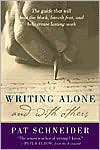
The teacher as writer part is easy. We are working with a great book, Writing Alone And With Others by Pat Schneider, and I have a lot of experience teaching writing and working with NWP to fall back on. However, I am still struggling a bit with the big topics I want to cover. Just as I am a work-in-progress teacher, I find that my philosophy of teaching writing is a work-in-progress. My goals for my writing students clearly reflect my philosophy. My goals for my first-year writing students this semester were:
1.       Develop as reflective and self-regulating writer
2.       Increase understanding of community and collaboration
However, those goals reflect my lifetime experience as a writer working with other writers, more than a decade experience teaching writing, and three graduate degrees in English/Rhetoric. But how do I, in just four short weeks, help the teachers I’m working develop their own philosophy of the teaching of writing? A few will have had some undergraduate or graduate work in the field of composition and rhetoric and/or theories of teaching writing, but most will have had minimal exposure at best.

I do not want to attempt some sort of crash course covering the theories of teaching writing and a history of composition and rhetoric (that way madness lies) but I do want to bring in some reading as well as my own musings to inspire reflection, writing, and discussion on some key topics. I hope my experienced friends will share what they believe those key topics to be!

I know I want to begin with an exploration of what it means to be a writer and how one becomes a writer. As we will be using Schneider’s book and writing groups then we will have discussion about writing workshop, feedback loops, and so on. However, I need to decide within the next few weeks what other big picture ideas I want to bring to the table. Then, of course, I will need to sort out how much of that I will share through readings and how much through my own words so if you have suggestions for articles that I absolutely must include please let me know.

Monday, December 19, 2011

Postpartum Depression and suffering from the End-of-Semester Blues


Grades were due this morning at my institution and that may be a contributing factor in my end-of-semester blues. I hate assigning grades to papers and to students, but unfortunately it is a necessary evil. I would rather focus on helping my students learn and grow as writers, but too many other forces (including my students) demand that I assign a grade. Perhaps if we could find a way to measure and quantify that learning and growth I would feel better about the grades that I assign, however as scholars of writing studies know, that learning and growth is not confined to the 16 weeks they were assigned to my class and does not show up in easily quantifiable ways.

I can use my own hard-won expertise to study a variety of data sources and evaluate the successes and failures of the semester which can help me (if not my students) move past those grades. I hope this process will help move me out of my current funk which I describe as postpartum depression or the end-of-semester blues, but I just can’t summon the energy to do so. I should also be cleaning my house and wrapping presents, but I don’t see either of those tasks getting done today.

The U.S. National Library of Medicine defines postpartum depression as the depression that occurs in women after giving birth. While it may be caused by changes in hormonal levels, it can also be caused by nonhormonal factors such as lack of sleep and worries about her ability as a mother. I can certainly sympathize with both of those factors at this point in the academic calendar and so feel justified in using the term to describe my current state. I am lacking sleep and worried about my ability as a teacher.

I’ve also read that postpartum depression is also caused by a period of grief and mourning. While the birth of a child is certainly cause for celebration, it is also the death of the dreams and possibilities that the expectant mother held. It is also the loss of a closeness that can never be recaptured. In time, those losses will fade in importance as new dreams and possibilities center around the child and a new relationship is forged. I think teachers experience similar losses whenever a class ends. Certainly this is the point when we must accept that all the dreams and possibilities that existed at the beginning of the semester have now either been fulfilled (or dare we hope exceeded) or fizzled into something we neither expected nor wanted. Fortunately, we can start anew in the next semester, but that doesn’t seem like much of a consolation prize when we are tired from the end-of-semester grading onslaught and worn out from dealing with the angst of our students. Maybe tomorrow I’ll be better equipped to look back objectively at the Fall 2011 Semester and begin looking ahead to Spring 2012. 

Monday, October 31, 2011

Abandoning audience awareness

I spent the weekend crafting proposals for the ATTW Conference and TCQ’s special issue on Social Media – and this after spending the previous weekend crafting a proposal for Computers and Writing. While this might sound like an overly ambitious program for the spring (two conferences in addition to my already accepted panel for Cs plus a journal article) let me hasten to assure you that everything but the Cs presentation is connected to the same topic and the Cs presentation is based on my dissertation work. So yes, this is ambitious, but not entirely crazy. Of course you can talk to me after C and W to see if I still think so. That is assuming I can still speak coherently.

What also makes this less crazy is that I have spent a lot of time in recent months reading and thinking about these ideas and then discussing them with my friends Lora Arduser and Kim Elmore (who also happen to be collaborators on ATTW and (just Kim) TCQ). Kim and I have talked about this issue with Lora’s students and I have also discussed this topic with my own students. In fact, this work has inspired changes in the way I teach audience.

What I have been focused upon is the issue of community and I have approached it from a number of different angles. Back in July I wrote about “What Is Community” and then in August I wrote about “Community and Social Capital” as I tried to understand what constitutes a community and why some communities thrive and succeed and others fizzle and fail. However, that led to still more questions, such as how one joins a community which led to my September post “Community: Jumping to become a full-patch member.”

It is easy to see from these posts (and the litter of references in them) that I have been thinking about these issues a great deal in recent months. I have been thinking about them as a technical communicator and researcher, but also as a teacher and I have reached some conclusions that have dramatically changed the way that I teach and think about written communication and how it should be taught.

Scholars in composition and technical communication have long agreed that audience is a central rhetorical concern. Ede and Lunsford argued that audience plays an important role in the writing process and the creation of meaning and contended that understanding audience can “help us better understand the complex act we call composing.” Of course the problem is that understanding audience is extremely challenging for both novice and experienced writers. Ong asked: “How does the writer give body to the audience for whom he writes?” This continues to be an important question today. While Ong’s “fictional” audience and Ede and Lunsford’s “invoked” audience have informed my work, I was not satisfied. Johnson’s “involved” audience provided further inspiration and some intense conversations with my collaborators have resulted in a new assignment for my students.

I have decided not to focus on audience per se because I worry that is too limiting and one-dimensional to be useful and is, in fact, a one-way channel of communication that is, I believe, part of the problem. Porter argues against determining a “fixed meaning” of audience and I want to give my students (and myself) a much more flexible and responsive notion of audience with which to work. I don’t believe that imagining, invoking, or (even) involving the audience is enough. The writer must do more than address their audience – the writer must engage with their audience. The only way for this to truly happen is by joining the community. This does not require “full patch membership” but it does require shedding their status as an outsider.

We have laid the foundation for such work in my class this semester by studying their chosen communities as outsiders and developing the “social literacy” that Cargile Cook argues is important, but we are now embarking on a project that I hope will begin bringing them across the boundaries and into the community. This involves learning more about the “civic mechanisms” Spinuzzi claims are essential for communities. My hope is that combining this knowledge of social literacy and civic mechanisms will help my students transcend the need for audience. Stay tuned as this could all crash and burn.

In the meantime, I will continue to read and reflect. Spinuzzi’s recent blog post about “network rhetoric” and Ronfeldt’s “In Search of How Societies Work” will certainly provide fodder for my next round of reflection.

Monday, September 19, 2011

Metareflection

My number one goal for the students in my writing classes is to help them grow into more reflective writers. While I recognize that I cannot teach them every lesson they will need in the coming years of writing in college and beyond, I hope that helping them become more reflective about their writing will in turn result in more self-regulation and greater self-confidence.

Achieving self-regulation and self-efficacy are my ultimate goals, but I have come to believe over 10-plus years of studying, theorizing and practicing the teaching of writing that reflection is the key to achieving the goals of self-regulation and self-efficacy in writers.

Albert Bandura defines self-efficacy beliefs as a person’s belief in their capability to produce the desired effect through deliberate action. Decades of research in diverse fields has shown that self-efficacy is a more consistent predictor of behavioral outcomes than other self-beliefs. In particular, research suggests that beliefs about writing processes and competence are instrumental to the writer’s ultimate success as a writer (Note: the work of Frank Pajares and his associates has greatly influenced mine). Self-efficacy beliefs are a self-fulfilling prophecy with positive self-efficacy beliefs leading to positive outcomes and negative self-efficacy beliefs leading to negative outcomes. This is not because of the power of positive (or negative) thinking, but simply that our thoughts and beliefs influence our behavior. Our self-efficacy beliefs influence our chosen course of action, perseverance and resiliency when experiencing difficulty, and reaction to stress and depression. If we possess low self-efficacy then we avoid the challenges that could help us develop new skills or hone existing skills and we give up much easier when facing difficulties. If we possess high self-efficacy then we accept (even seek out) new challenges and persevere through difficulty by seeking new skills and tools to solve problems.

Clearly (in my opinion) there is a link between self-efficacy and self-regulation, but how does reflection link to self-efficacy and self-regulation? First, regular written reflection provides two important sources of self-efficacy – mastery experience and vicarious experience. Experience writing is a key part of developing writing self-efficacy. Obviously reflection cannot be the only writing a student conducts but it is certainly valuable writing experience. However, the real value of reflection in terms of writing self-efficacy is reflection that involves vicarious experiences such as making observations about the practices and habits as well as successes and failures of other writers then learning to make similar observations about their own writing. If done well then reflection can serve not only as an important source of writing self-efficacy but also lead to greater self-regulation and better writing.

Another important way that reflection impacts self-efficacy and self-regulation is helping students begin to engage with their own writing on a deeper level and to take responsibility for their own growth and development as writers. Once you begin thinking about your writing not as a one-size-fits-all proposition but as influenced by the rhetorical context then you are truly on the path to become a writer. Reflective writers think about their own writing and the choices they have made and can make as well as the consequences of those choices. Once engaged in reflection then writers can continue their growth and development long after they leave my classroom.

Tuesday, February 22, 2011

The Evolution of My Writing Workshop

I intended to blog about my philosophy of grading re Prof Hacker but I just couldn't bring myself to do it. Isn't grading painful enough without thinking about it when I don't have to do so? Then another Prof Hacker post about grading (grading contracts that is) made me think again about how I manage grading. My philosophy of teaching is focused on fostering the growth of the writer and so I really do not like to dwell on the product of writing as I see it as a means to an end (the growth and development of the writer) rather than the end in itself. However, the workshop process that has evolved in my classroom is something that I could write about – and in fact have been asked to write about – and so here it is.

I have always set up my writing classes around some version of a writing workshop. For me, a writing workshop classroom means focusing on the writer and the writing rather than the teacher and the lecture. I believe writers learn and grow when they are actively engaged in writing and participate in a feedback loop that supports revision and fosters self-regulation. I believe the timely administration of a mini-lesson is far more effective than a lecture. But this post is about grading or feedback – not teaching. And so, back to my writing workshop. What does it look like? My writing workshop incorporates drafting and revision as well as a feedback loop. It uses reflection and self-regulation as well as working toward a final portfolio or some other final project.

These elements have remained constant but not static as they have evolved over the course of a decade of teaching writing. Back when I taught modes my students wrote five rough drafts and then after receiving feedback revised four essays and then after more feedback completed three final drafts for a portfolio. Today my students collaborate on a number of small projects before drafting papers that go through workshop before submission for a final grade and more feedback then they use those pieces as part of a larger final project (a blog).

My feedback process has also evolved over time. During my first years of teaching I graded even rough drafts but as I was teaching as many as five sections of writing (with a total of 125 students) at a time that was an incredible burden. Plus, I found that it actually interfered with the revision process as some students would take the attitude that the paper was “good enough” and did not always realize that the grade assigned to a rough draft did not translate into the same grade for a final draft. Around the same time I began teaching writing online and so I moved my workshop into a discussion board. Students posted their drafts in the discussion board and received feedback from me as well as their peers. I really loved this model as it allowed me to focus on helping students improve their writing – and not on grading. I also discovered that the transparency of sharing writing and feedback in this way fostered conversations with and among students about writing that would not have occurred under my old workshop model. I also learned that making the entire workshop process visible in this way made these conversations a resource for all students. I became so enamored of the online writing workshop that I began to use it even with my face-to-face classes.

Then I initiated a collaborative grading research project with two of my colleagues that involved the use of rubrics and I soon found that my blissful workshop model could not seamlessly integrate the use of rubrics. It took a semester to work out how to use rubrics in a way that still offered substantive feedback that supported revision. After the research project was over I asked my students about continuing the use of rubrics (secretly hoping I could abandon them) but students overwhelming responded that they liked the rubrics and found them useful when drafting as well as revising. And so rubrics continue to play an important role in my writing workshop as well as of course my grading.

I have always believed that reflection plays an important part in the growth and development of a writer and that belief has been reinforced by my experience as a teacher, a writer, and a researcher. In fact, my most recent research project reinforced this to an extent that surprised me. At various points during my teaching career I have used writing journals as well as portfolio reflections. I have required that students write a “grade note” when submitted papers that explains how their work meets or exceeds the criteria for a particular grade. My current writing workshop asks students to reflect on their process for each writing assignment and then to metawrite at the end of the semester about their growth and development as a writer. In addition, my students are required to Tweet thoughts about writing which may or may not be further developed in their writing reflections and metawriting.

I hope my writing workshop helps my students grow and develop as writers but my research on that is still pending. You know that pesky dissertation has taken a lot of my time.